
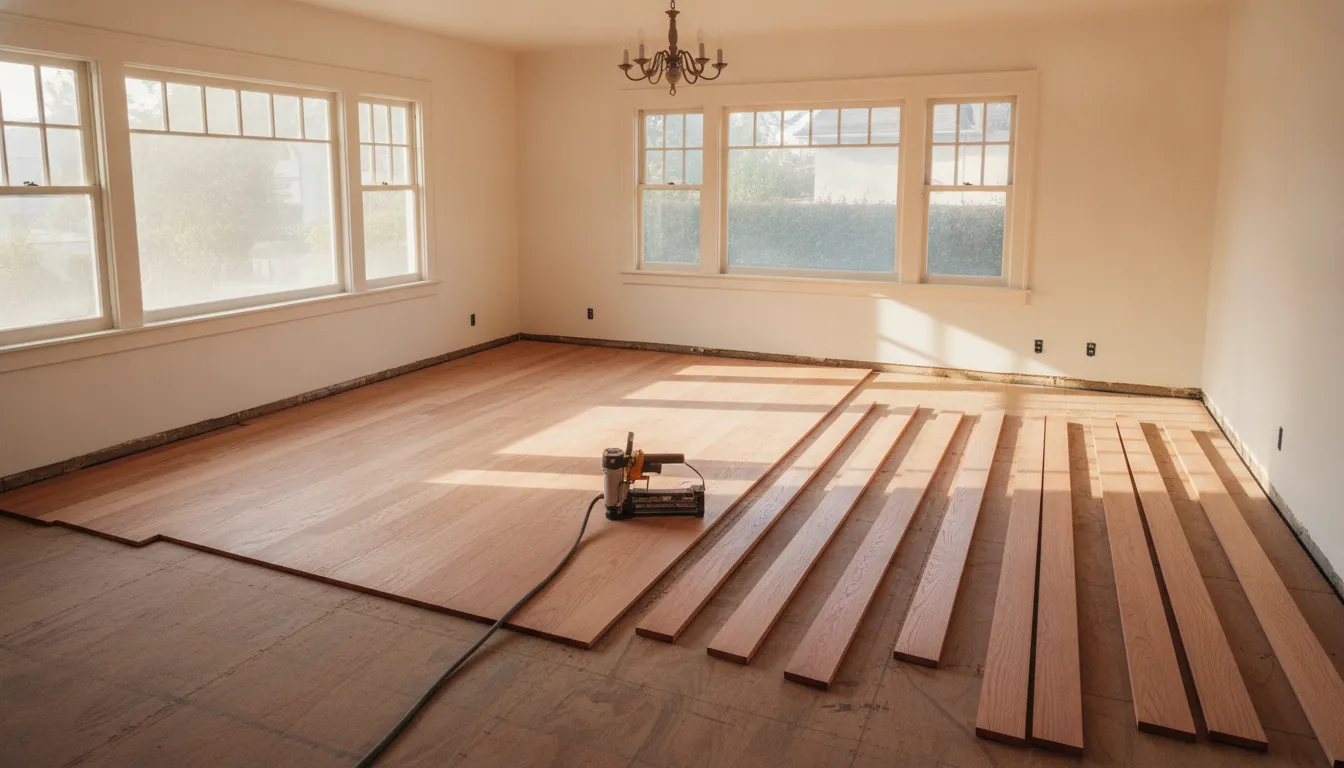
Hardwood floor installation for Los Angeles homes
We install solid and engineered hardwood, chosen for the subfloor under your room, tested and acclimated before a board goes down.
- Solid and engineered
- Slab or wood subfloor
- Herringbone and stairs
Solid or engineered starts with the subfloor
Both are real wood on top. The difference is underneath, and so is the decision.
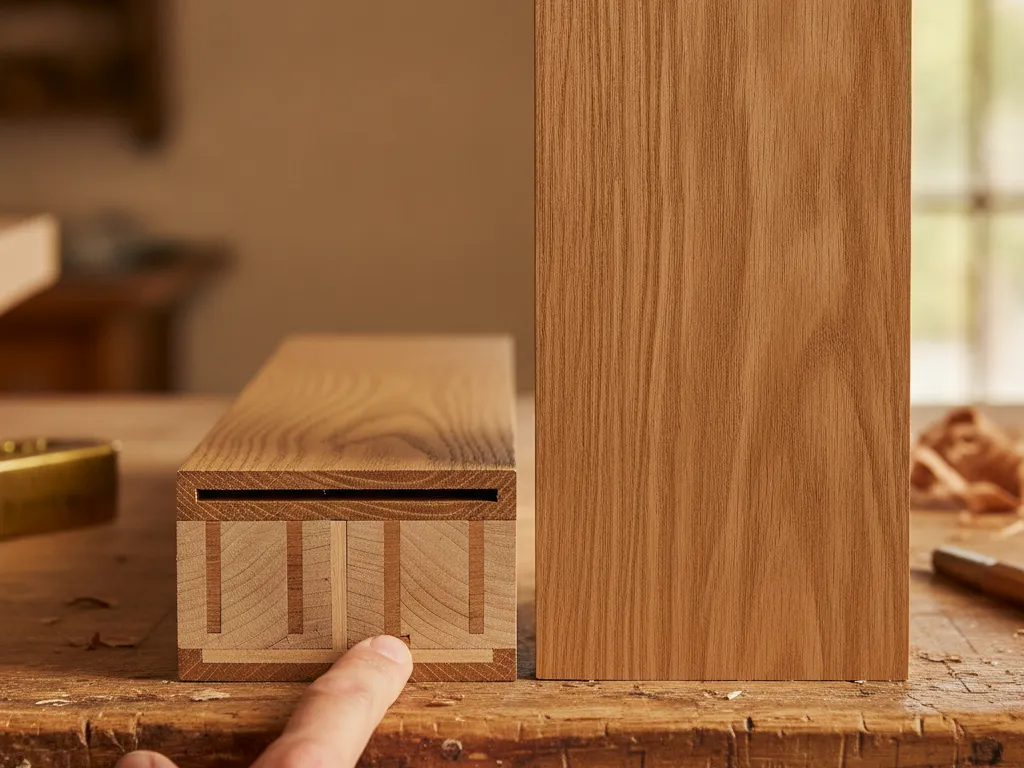
Solid hardwood is one piece of wood from top to bottom. It can be sanded and refinished many times over its life, and it is nailed down to a wood subfloor. Engineered hardwood has a real wood top layer bonded to a stable cross-ply or composite core. It moves less with changes in humidity, and it can be glued straight to concrete or floated.
That makes the subfloor the first question. In a house over a crawl space with a sound plywood or plank subfloor, solid wood nails down directly and is often the natural choice. On a concrete slab, which many Los Angeles homes have, engineered wood glued or floated over a tested slab is usually the simpler, more stable answer. Solid wood can still go over a slab, on a plywood subfloor fastened to the concrete with a vapor retarder between them.
We tell you which options your floor allows, and why, before you pick a species or a color.
How the wood goes down
Three methods, chosen for the subfloor and the product.
Nail-down. Solid strip or plank is blind-nailed through the tongue into a wood subfloor. It is the traditional method and the quietest underfoot.
Glue-down. Engineered planks are set in a moisture-blocking adhesive directly on a dry, flat slab. The floor feels solid and sounds like wood.
Floating. Engineered planks lock to each other over an underlayment and are not fastened to the subfloor. It is fast, it works over many existing floors, and in a condo the underlayment carries the sound rating.
Before any method, we test the slab for moisture in several places and check the floor for flatness. Low spots are leveled. A floor laid on a wet or wavy base will show it, no matter how good the wood is.
Acclimation, species and patterns
The choices that make the floor yours, and the step that keeps it flat.
- 01
Acclimation in LA air
Los Angeles swings between dry Santa Ana weeks and damp winter months, and wood moves with humidity. We deliver the boards to your home and let them sit in the rooms where they will be installed until their moisture matches the house. Rushing this step is how gaps and cupping start.
- 02
Species and color
White oak and red oak are the classics, with walnut, hickory and maple for a different look. White oak takes stains evenly and suits the light, natural tones many LA homes favor. We bring samples and show them in your light.
- 03
Plank width and pattern
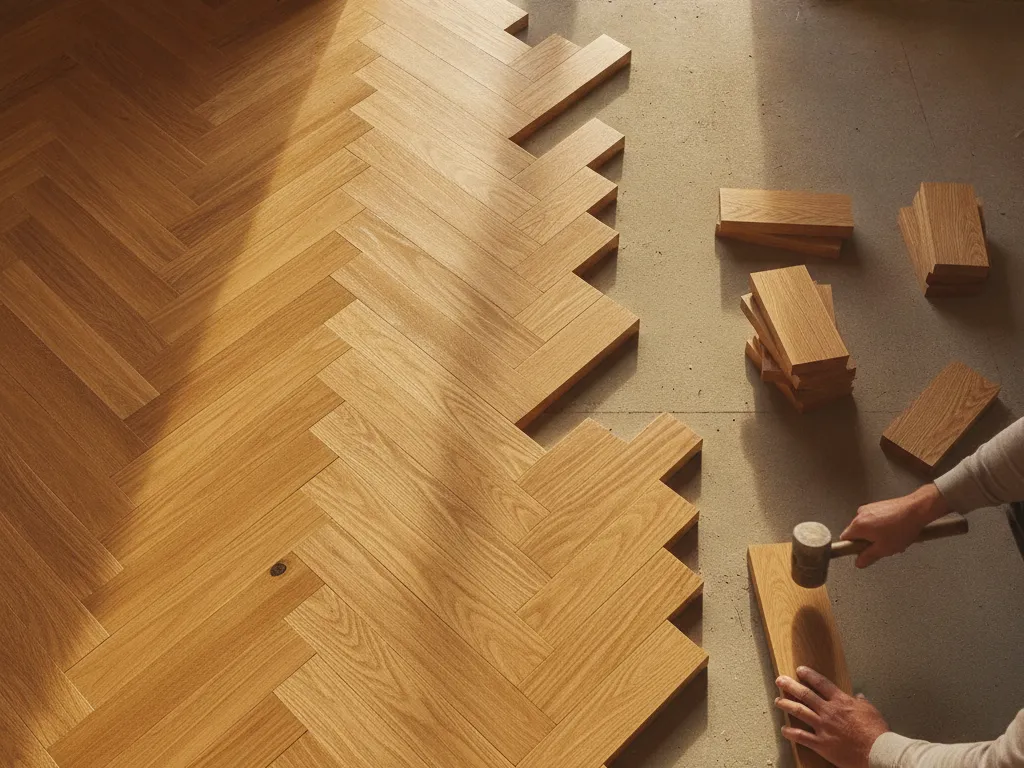
Narrow strip suits older homes. Wide plank suits open, modern rooms. Herringbone and chevron add pattern and take more time to lay, which shows in the quote.
- 04
Site-finished or prefinished
Prefinished boards arrive sealed and the room is usable sooner. Site-finished floors are sanded and coated after installation, which lets us match an existing floor and gives a smooth, seamless surface.
Stairs, transitions and trim
The edges are where an installation looks finished or not.
A new wood floor usually meets other surfaces: tile in the kitchen, carpet on the stairs, an existing floor down the hall. We fit transitions at matching heights so the joins look intentional and nobody catches a toe.
Stairs can take new hardwood treads and risers, or nosing that matches the floor at the top and bottom of the run. We remove and reset baseboards, or fit new ones with quarter round where the design calls for it.
If an existing wood floor only has a few damaged boards, floor repair may be all it needs. If you would rather keep it and add a room, we lace the new boards in and refinish everything together so it reads as one floor. When a floor only needs bringing back, refinishing an existing hardwood floor costs far less than replacing it.
What drives the price of a hardwood floor
Material, preparation, method and details.
The wood itself is the biggest variable: species, grade, plank width, and solid versus engineered. Then removal of the old floor, the work the subfloor needs, the installation method, site finishing if you choose it, and the details such as stairs, patterns and trim. We walk through each line in our quote.
For a fuller picture of the numbers before you call, read what a hardwood floor costs to install.
Questions about hardwood installation
What is engineered hardwood?
Engineered hardwood is a plank with a real wood top layer bonded to a stable core of cross-laid plies or composite. You see and walk on real wood, but the plank moves less with humidity, which makes it a good choice over concrete slabs and in rooms with changing conditions.
Is solid or engineered hardwood better for my house?
It depends on the subfloor. Over a sound wood subfloor, solid hardwood nails down directly and can be refinished many times. On a concrete slab, engineered wood is usually simpler and more stable. We check your floor and explain the options before you choose.
Why do the boards sit in the house before you install them?
Wood takes on or gives up moisture until it matches the air around it. Letting the boards acclimate in your home before installation means they do that before they are fastened down, not after, which keeps gaps and cupping away.
Can you install hardwood on stairs?
Yes. We install new hardwood treads and risers, or nosing that matches the floor where the stairs meet it. Stairs are quoted separately because each step is cut and fitted by hand.

Planning a new wood floor?
Tell us the rooms and what is underneath if you know. We will check the subfloor and walk you through the options.