
Floor repair in Los Angeles, starting with the cause
A floor that lifts, squeaks or stains has a reason. We find it first, then repair the floor so the problem does not come back.
- Wood, vinyl, laminate, tile, carpet
- Water damage
- Squeaks and soft spots
The damage you see is not always the problem
Replace a board without fixing the cause and the new board fails the same way.
Cupped boards, a vinyl plank that has lifted, a tile that rings hollow or a soft spot near the bathroom all have a cause underneath. It might be a slow leak, moisture coming up through a slab, a subfloor panel that has come loose, or adhesive that gave up.
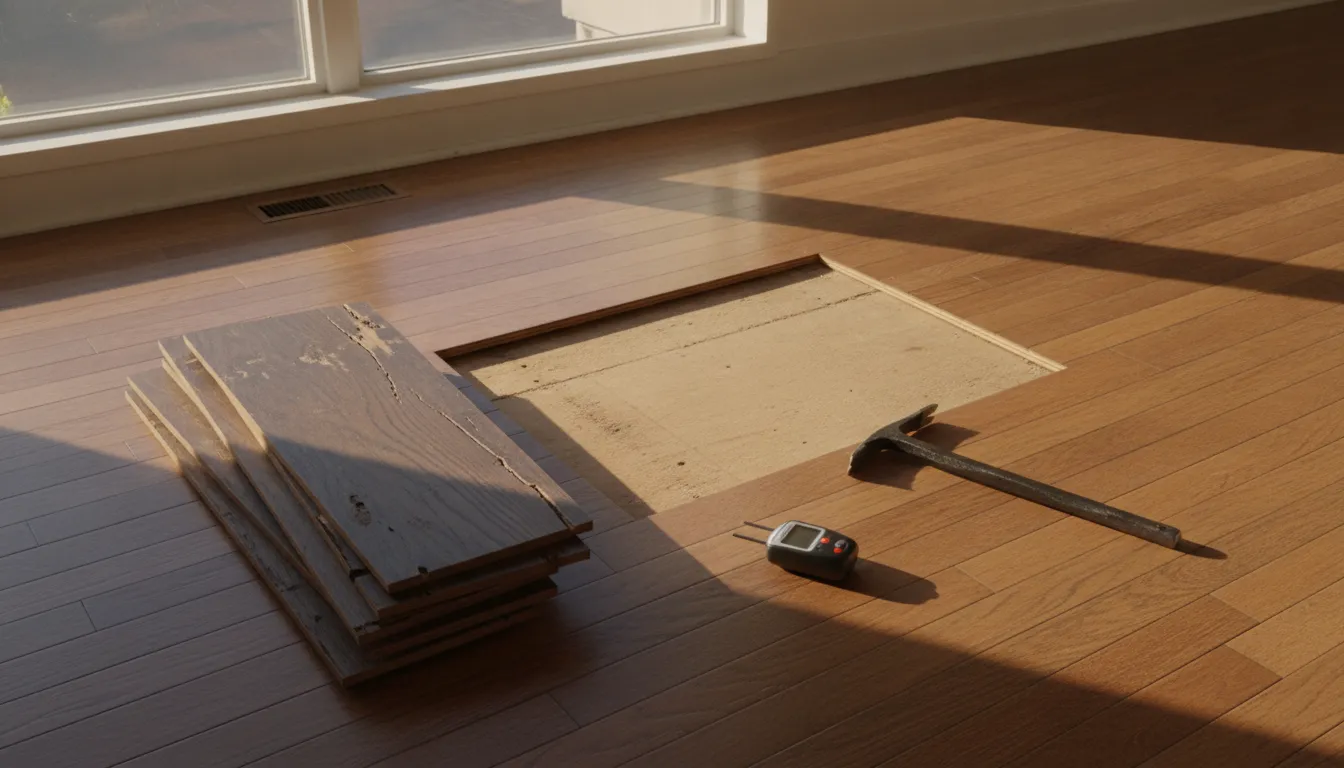
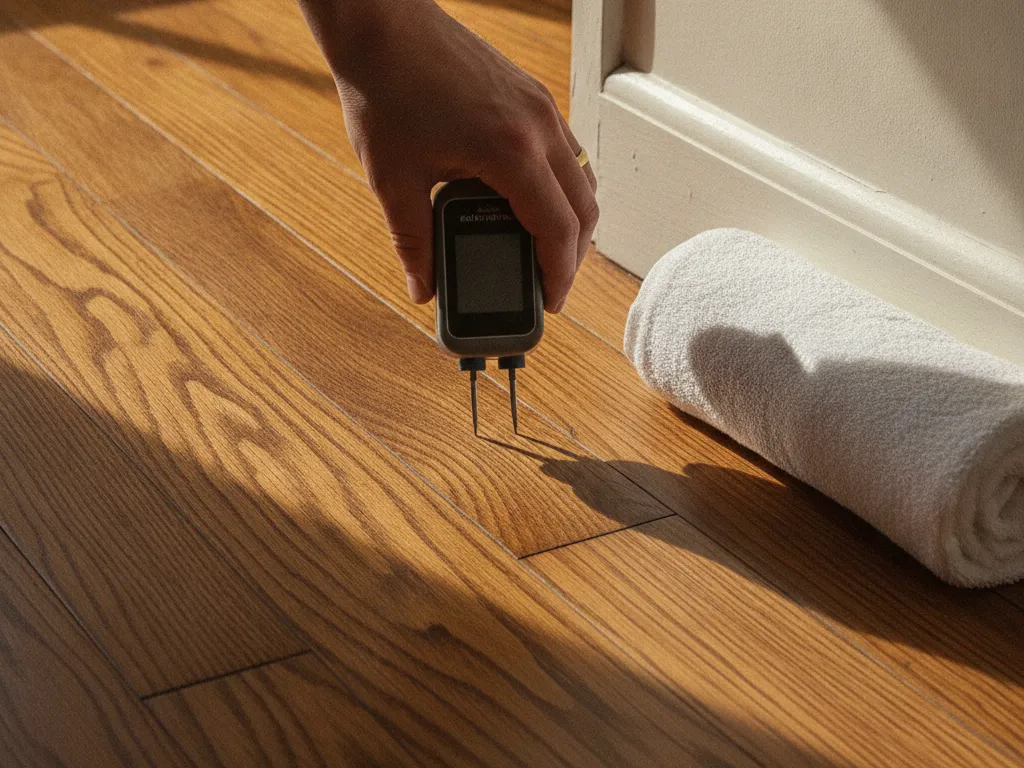
So a repair starts with a look under the surface. We take moisture readings across the area and around it, check the subfloor where we can, and trace water back to where it came from. Then we tell you what caused the damage, what has to be fixed first, and what the repair involves.
Repairs across every floor
The method changes with the material. The order does not: cause first, then repair.
- 01
Wood floors
Cracked, split, stained or lifted boards are cut out and replaced with matching wood, woven into the surrounding floor. Then the area, or the whole room, is sanded and finished so the repair blends.
- 02
Vinyl plank and laminate
Click-together vinyl plank floors can often be opened from the nearest wall and damaged planks swapped. Glue-down vinyl is cut out and replaced. We keep spare planks from your install when we can.
- 03
Tile
Cracked or hollow tiles are removed, the bed beneath is checked, and new tiles are set and grouted to match. A failing floor can also be retiled. Loose areas usually point to a problem in the base, which we fix first.
- 04
Carpet
Ripples and loose seams are re-stretched and resealed. Burns and stains can often be patched with a piece cut from a closet.
Water under a floor
The faster it dries, the more of the floor you keep.
Water from a supply line, a dishwasher, a toilet or a window can travel under a floor further than you can see. Wood absorbs it and cups. Laminate swells at the joints and does not go back. Vinyl itself survives, but water trapped under it can damage the subfloor.
If water is still coming in, stop it at the valve first and call us. We measure how wet the floor and subfloor are, open up what needs opening, and tell you what can be dried and kept. Sometimes a wood floor flattens again once it dries and only needs refinishing. Sometimes the boards or the subfloor need replacing.
On slabs, moisture can also come up from below without any leak at all. That shows as cupping across a whole room or adhesive letting go. The fix there starts with the slab, not the boards.
Squeaks, soft spots and uneven floors
Most of these come from the subfloor.
A squeak is usually wood rubbing on wood or a nail moving in its hole. We fasten the subfloor to the joists from above or below, and secure loose boards with trim-head screws that disappear into the floor.
A soft or springy spot can mean a damaged subfloor panel, a gap over a joist, or past water damage. We open the floor, replace or reinforce the subfloor, and close it again.
Uneven floors on a slab are leveled with patching or self-leveling compound before the floor goes back down.
Matching new to old, and when to replace instead
A good repair is one you cannot find later.
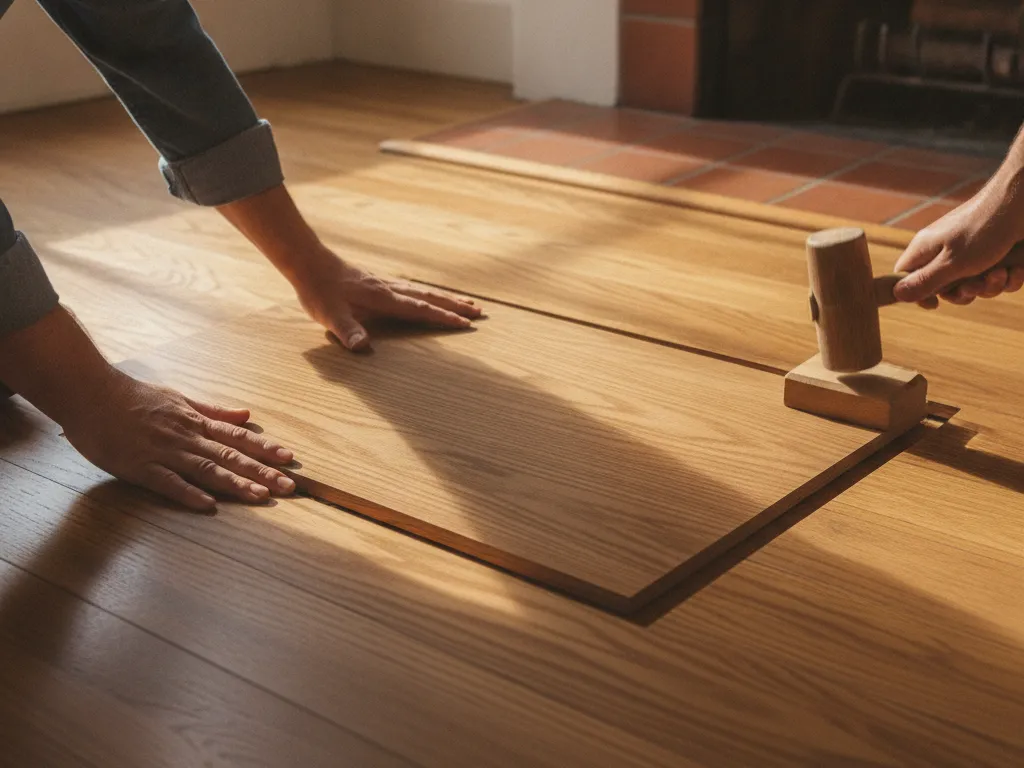
To match an existing wood floor we look at species, board width, grain and how the color has aged. We source boards to match, or take some from a closet or under a cabinet and use the new ones there. Sanding and finishing the whole room evens out the color.
A repair stops making sense when the damage covers most of the room, when the floor is near the end of its life, or when the cause means the same floor would fail again. We tell you when that is the case, and help you refinish the whole floor or replace the floor instead.
Questions about floor repair
Why is my wood floor cupping or lifting?
Cupping, where the edges of each board sit higher than the middle, almost always means moisture from below: a leak, a damp crawl space or moisture rising through a slab. Lifting can also come from boards with no room to expand. We find the source before recommending a repair.
Can you match new boards to my old floor?
Usually, yes. We match species, width and grain, and blend the color by sanding and finishing the area or the whole room. Older floors with unusual widths may take some sourcing, and we tell you if a close match is not possible.
How do you fix a squeaky floor?
We find where the floor is moving and fasten it. That can mean screwing the subfloor to the joists from below, adding shims or blocking, or securing boards from above with screws that hide in the floor.
What does a floor repair cost?
It depends on the cause, the size of the area, the material and whether the subfloor needs work. A few boards or tiles is a small job. Water damage across a room is a larger one. After we find the cause, we give you a written quote for the repair.

Something wrong with your floor?
Send photos of the damage and tell us when you first noticed it. If water is still coming in, call right away.